
Thrive Market
Thrive Market is a membership e-commerce platform offering discounted natural and organic snacks, supplements, home, beauty, and baby products.
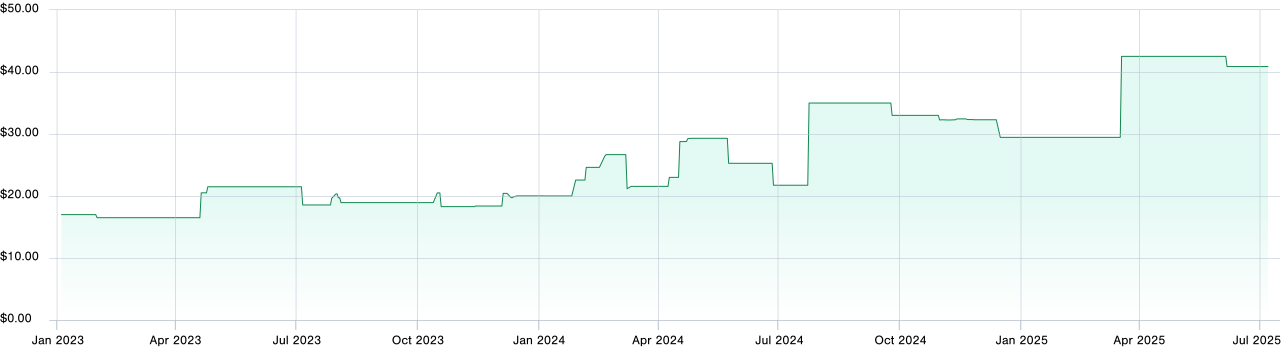
Secondary Market Price
How Thrive Market Measures Up
To help you manage your Thrive Market equity, Prospect has run the company through our machine learning model.
Prospect Rating
--
This rating reflects our belief in this company's potential to grow to that many times its current value in 4 years. For an employee with stock, this rating suggests a potential return on equity, but it also comes with some risk.
Exit Risk
--
Our rating is a reflection of the likelihood of this company achieving a liquidity event for its employees based on the quality of investors, funding stage, founders, and more.
Funding Stage
Series B
A company’s funding stage reflects how established it is, how quickly it is scaling, and the average impact an employee may have when joining.
Secondary Market Price Chart
Create a free account to unlock real-time secondary market prices and future projections of Thrive Market's value.
Sign up to Unlock the Latest DataData will be available soon.
Sign up to receive notifications when it is available.
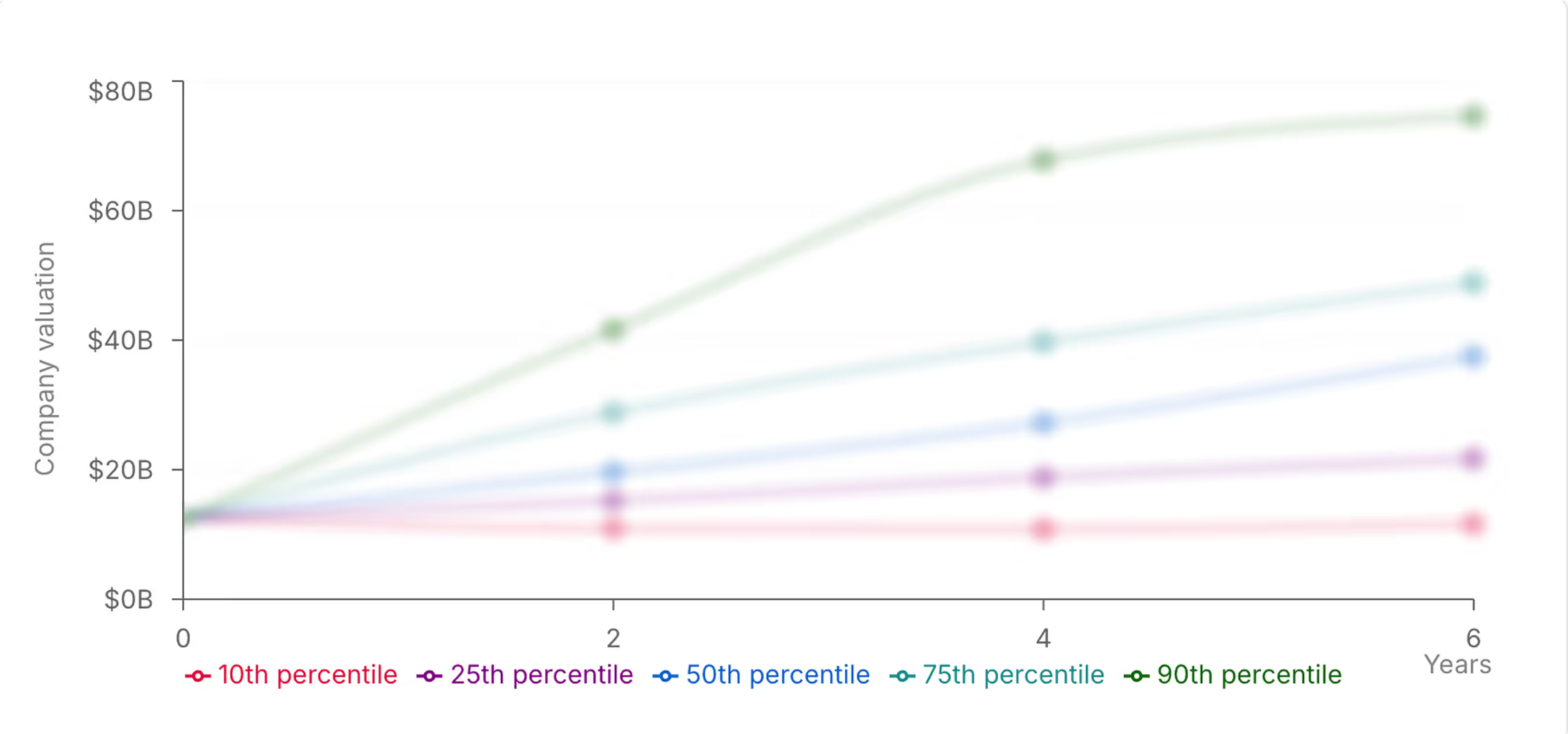
Prospect Projected Future Thrive Market Prices
Prospect’s machine learning model has been trained on the same data top-tier investors use to project the likely range of outcomes for Thrive Market's equity. Create a free account to view 10th-90th percentile projections over 2, 4, and 6 years.
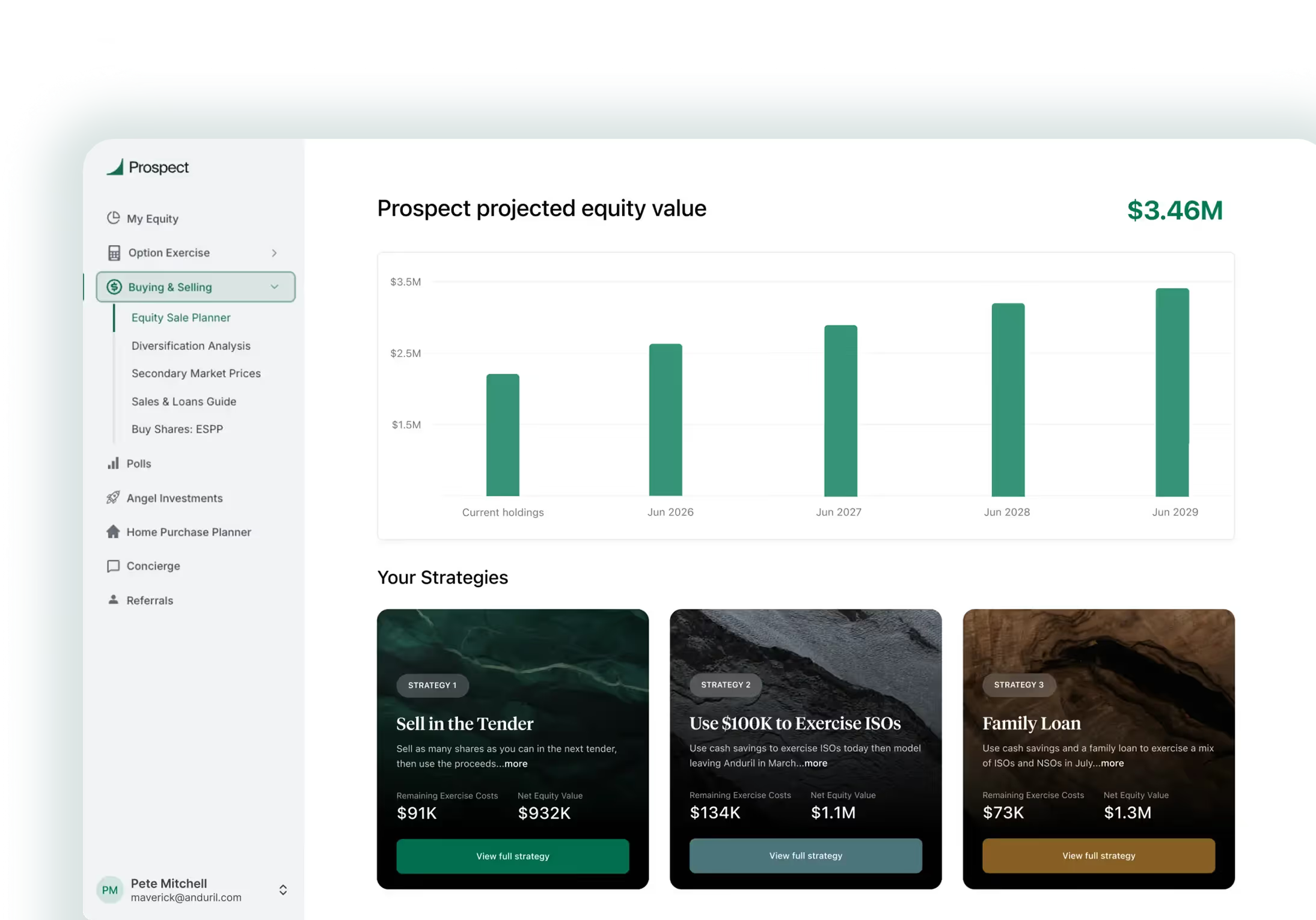
Powerful tools to earn more from your equity
Company Description
Thrive Market is a membership-based e-commerce platform focused on natural and organic products. For an annual fee of $60, members gain access to items like healthy snacks, supplements, home goods, and baby products at prices stated to be 30-50% below retail value. The company also runs a "Thrive Gives" initiative, where each paid membership sponsors a free one for a family in need. Founded in 2013 by Nicholas R. Green, Gunnar Lovelace, Kate Mulling, and Sasha Siddhartha, the company has grown to serve over 1.6 million subscribers and has raised a total of $161.9 million in funding across eight rounds.
Looking forward, Thrive Market is investing in AI-powered personalization to create tailored shopping carts and subscription services, aiming to simplify the experience for members, including those with food allergies. The company is also expanding its product selection, having recently retired its alcohol offerings to launch a non-alcoholic category featuring beers, wines, and mocktails. Recent announcements include being named to Fortune’s 2025 Change the World list for its social and environmental impact. Additionally, CEO Nick Green spoke at Groceryshop 2025 about using AI to expand access to healthy living, and Chief Marketing Officer Amina Pasha was recognized by Ad Age as a Breakout Brand Leader.
- Invus
- Greycroft Partners
- E-Ventures
- Cross Culture Ventures
- Kapor Capital
- MaC Venture Capital
- Mercia Fund Managers
- MKaNN
- Portugal 2020
- Qiming Venture Partners USA
- Wharton Asset Management Company Limited
- 4DX Ventures
- AIM Group
- EPIC Ventures
- GS Retail Co., Ltd.
- Scripps Networks
- CAVU Venture Partners
- Powerplant Ventures
- Deepak Chopra
- Tony Robbins
- Jillian Michaels
- Demi Moore
- John Legend
- Toby Maguire
- Co-Founder, Nick Green
- Co-Founder, Gunnar Lovelace
- Co-Founder, Kate Mulling
- Co-Founder, Sasha Siddhartha
Peer Group Comparison
Vs Peer Group of >$4B Startups

Frequently Asked Questions
Joining Anduril as an employee is another way to acquire equity, typically through stock options included in compensation packages.
Is Thrive Market worth joining?
Deciding whether to join any startup depends on your personal career goals and your assessment of the company's future prospects. Tools designed for equity management can help you model the potential financial outcomes of your compensation package to make a more informed decision.
What should I do with my Thrive Market stock?
Managing private company stock involves making complex decisions around exercising options, tax planning, and timing potential sales. Platforms like Prospect can help by providing customized, multi-year strategies to help you maximize the value of your equity and minimize your tax burden.
Can you sell Thrive Market stock?
As Thrive Market is a private company, its stock is not traded on public exchanges, but employees can often sell shares through secondary markets or company-organized tender offers. Navigating these sales can be complex, but there are resources available to help you determine how much to sell and which shares are most tax-optimal.
How can I find the value of my Thrive Market stock?
The value of private stock is not publicly available, but it can be estimated based on the company's latest 409A valuation or recent secondary market transactions. To get a more data-driven estimate, you can use services that offer predictive models to forecast your equity’s value based on the same data top VCs use.
What is Thrive Market's equity worth?
The precise worth of a private company’s equity is not public information and changes based on performance, funding, and market conditions. The value is formally assessed through 409A valuations, but you can also use specialized platforms to project a range of likely outcomes for your shares.
What is Thrive Market's stock ticker symbol?
Thrive Market does not have a stock ticker symbol because it is a private company and its shares are not listed on a public stock exchange. Ticker symbols are only assigned to companies after they complete an Initial Public Offering (IPO).
Can I buy or sell Thrive Market stock?
For employees, selling stock is often possible through secondary markets or tender offers, and platforms like Prospect can help optimize these transactions. Buying shares, however, is typically restricted to accredited investors or institutional firms and is subject to the company's approval.
What is the criteria to buy or invest in Thrive Market stock?
Investing in a private company like Thrive Market is generally limited to accredited investors who meet specific income or net worth thresholds, as defined by financial regulators. Employees, on the other hand, typically acquire equity as part of their compensation without needing to meet these criteria.