Pacific Ag
Pacific Ag, North America's largest crop residue supplier, provides agricultural feedstocks for bioenergy, animal protein markets, and commercial mushrooms.
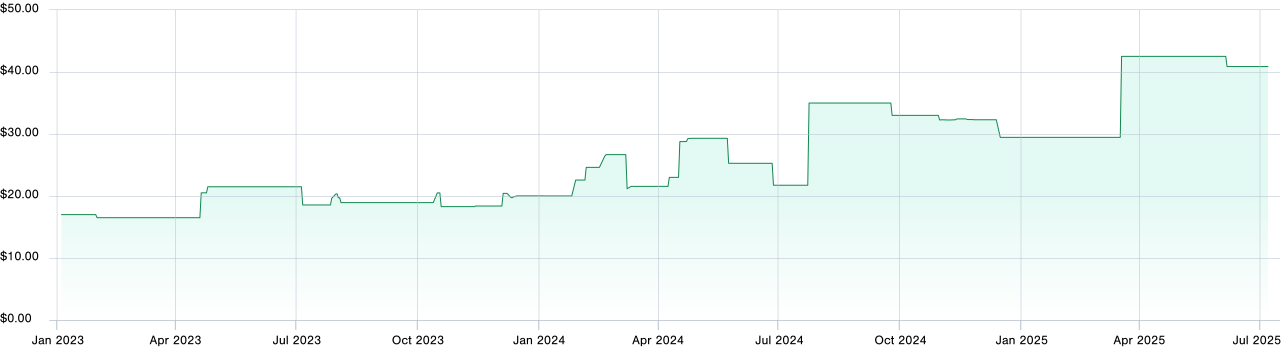
Secondary Market Price
How Pacific Ag Measures Up
To help you manage your Pacific Ag equity, Prospect has run the company through our machine learning model.
Prospect Rating
--
This rating reflects our belief in this company's potential to grow to that many times its current value in 4 years. For an employee with stock, this rating suggests a potential return on equity, but it also comes with some risk.
Exit Risk
--
Our rating is a reflection of the likelihood of this company achieving a liquidity event for its employees based on the quality of investors, funding stage, founders, and more.
Funding Stage
TBD
A company’s funding stage reflects how established it is, how quickly it is scaling, and the average impact an employee may have when joining.
Secondary Market Price Chart
Create a free account to unlock real-time secondary market prices and future projections of Pacific Ag's value.
Sign up to Unlock the Latest DataData will be available soon.
Sign up to receive notifications when it is available.
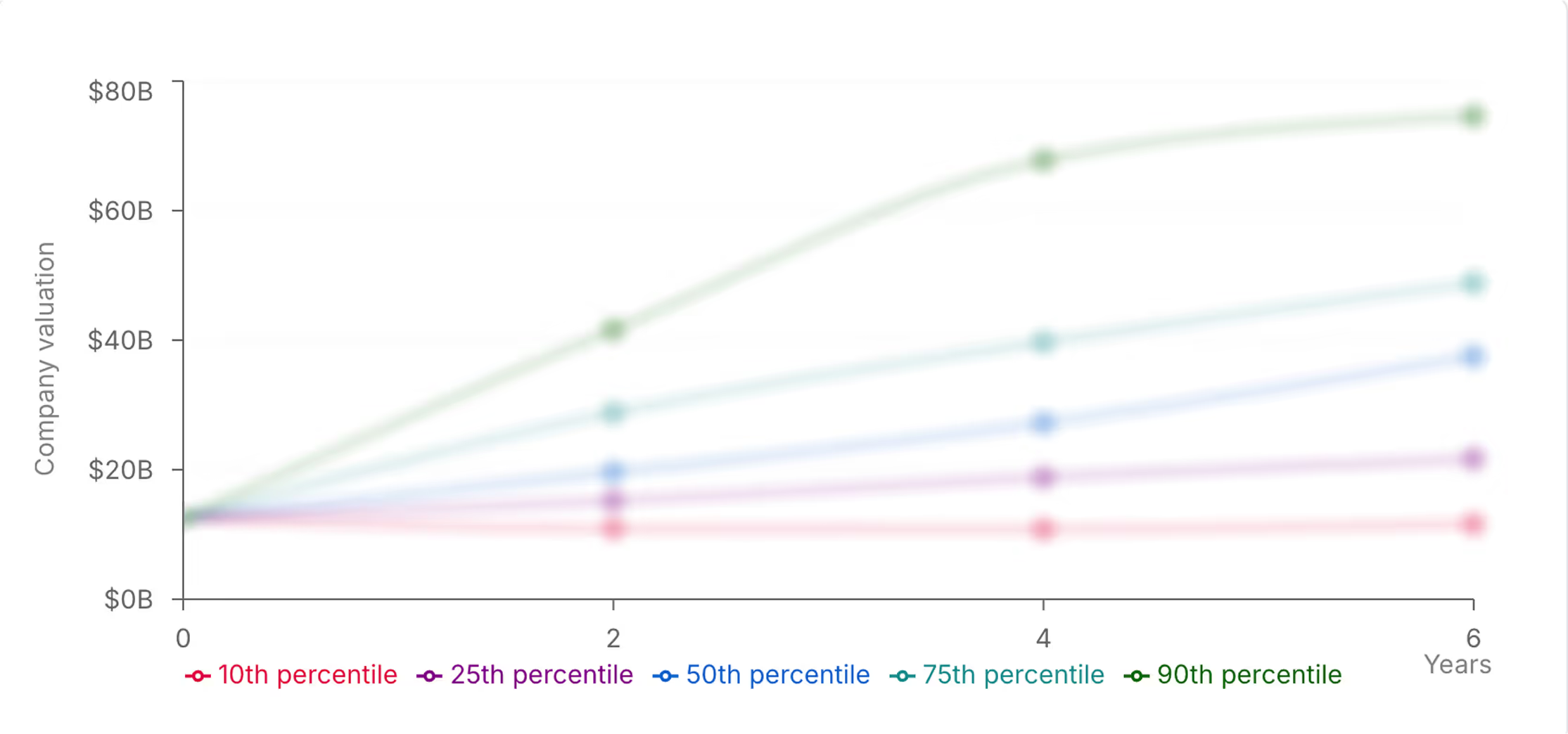
Prospect Projected Future Pacific Ag Prices
Prospect’s machine learning model has been trained on the same data top-tier investors use to project the likely range of outcomes for Pacific Ag's equity. Create a free account to view 10th-90th percentile projections over 2, 4, and 6 years.
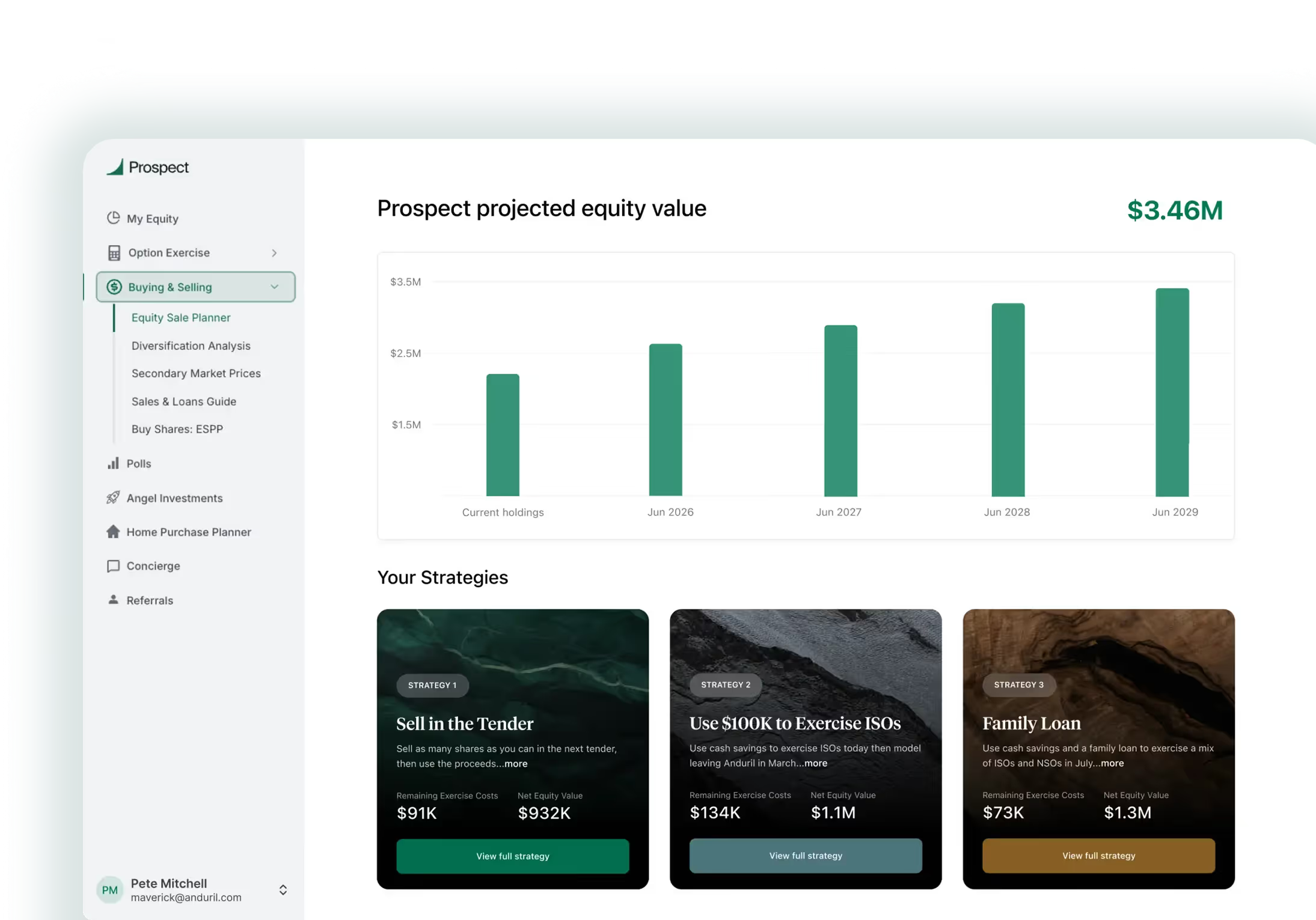
Powerful tools to earn more from your equity
Company Description
Pacific Ag is North America’s largest crop residue harvest and supply company. Its current business activities are centered on harvesting, supplying, renewables, and development. The company works directly with growers to implement sustainable residue management plans and operates supply chains for crop residue and hay forage, serving markets such as animal feed, commercial mushroom production, and erosion control. It also develops and operates bioconversion projects to create low-carbon fuels, packaging, and textile fibers from renewable farm feedstocks. Founded in 1998, Pacific Ag initially focused on providing forage for animal protein markets and compost for mushroom production. The company expanded its scope in 2010 to include bioenergy production, leveraging agricultural feedstocks for a wider range of applications.
Looking ahead, Pacific Ag plans to continue developing sustainable agricultural feedstock supply chains for cellulosic bioconversion into biofuels, biochemicals, and tree-free pulp for paper and building materials. The company’s strategy is to further establish agricultural residue as a viable alternative to fossil fuels. Recent initiatives that highlight this direction include the launch of Pacific Ag Renewables, an entity focused on integrating feedstock supply with bioconversion projects, and the development of the Sunnyside RNG project. These efforts underscore the company's focus on using agricultural byproducts to support decarbonization.
- Great Rock Capital
- Advantage Capital Agribusiness Partners, LP
- U.S. Small Business Administration
- Co-Founder, CEO Brian Schimpf
- Co-Founder, Bill Levy
Peer Group Comparison
Vs Peer Group of >$4B Startups

Frequently Asked Questions
Joining Anduril as an employee is another way to acquire equity, typically through stock options included in compensation packages.
Is Pacific Ag worth joining?
Deciding whether to join a private company like Pacific Ag requires careful consideration of its growth prospects and your potential equity compensation. Tools like Prospect can help you analyze the value of your equity offer using data-driven models to make a more informed decision.
What should I do with my Pacific Ag stock?
The right strategy for your Pacific Ag stock depends on your personal financial situation, tax liabilities, and long-term goals. Platforms like Prospect can build a customized plan for you, helping you decide when to exercise options or sell shares to maximize your post-tax returns.
Can you sell Pacific Ag stock?
Selling stock in a private company like Pacific Ag is often possible through secondary markets or company-organized tender offers, though it can be a complex process. Financial tools can help you identify tax-optimal shares to sell and understand market pricing to inform your decision.
How can I find the value of my Pacific Ag stock?
Determining the value of stock in a private company is difficult as it doesn't trade on public exchanges. You can use a platform like Prospect, which uses machine learning models to project the future value of your equity based on the same data top VCs use.
What is Pacific Ag's equity worth?
The precise worth of private equity like Pacific Ag's is uncertain until a liquidity event like an IPO or acquisition occurs. However, specialized tools can provide data-driven projections to help you estimate the potential range of outcomes for your shares.
What is Pacific Ag's stock ticker symbol?
As a private company, Pacific Ag does not have a stock ticker symbol. Ticker symbols are only assigned to companies when they list their shares for trading on a public stock exchange.
Can I buy or sell Pacific Ag stock?
Employees can typically "buy" stock by exercising their vested options, while selling is sometimes possible on secondary markets or in tender offers, subject to company approval. Platforms like Prospect provide tools to help you create tax-optimized strategies for both exercising options and selling shares.
What is the criteria to buy or invest in Pacific Ag stock?
Investing in a private company like Pacific Ag is typically restricted to employees who receive equity compensation or accredited investors participating in funding rounds. The specific criteria for any transaction are set by the company and governed by financial regulations.