
Hugging Face
Hugging Face is an AI community and platform for building, training, and deploying machine learning models using open-source tools.
Secondary Market Price
How Hugging Face Measures Up
To help you manage your Hugging Face equity, Prospect has run the company through our machine learning model.
Prospect Rating
--
This rating reflects our belief in this company's potential to grow to that many times its current value in 4 years. For an employee with stock, this rating suggests a potential return on equity, but it also comes with some risk.
Exit Risk
--
Our rating is a reflection of the likelihood of this company achieving a liquidity event for its employees based on the quality of investors, funding stage, founders, and more.
Funding Stage
Series D
A company’s funding stage reflects how established it is, how quickly it is scaling, and the average impact an employee may have when joining.
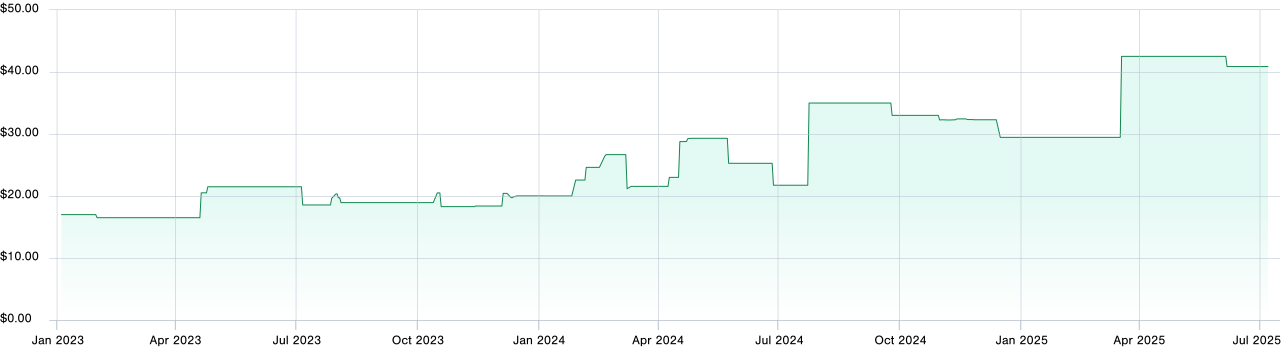
Secondary Market Price Chart
Create a free account to unlock real-time secondary market prices and future projections of Hugging Face's value.
Sign up to Unlock the Latest DataData will be available soon.
Sign up to receive notifications when it is available.
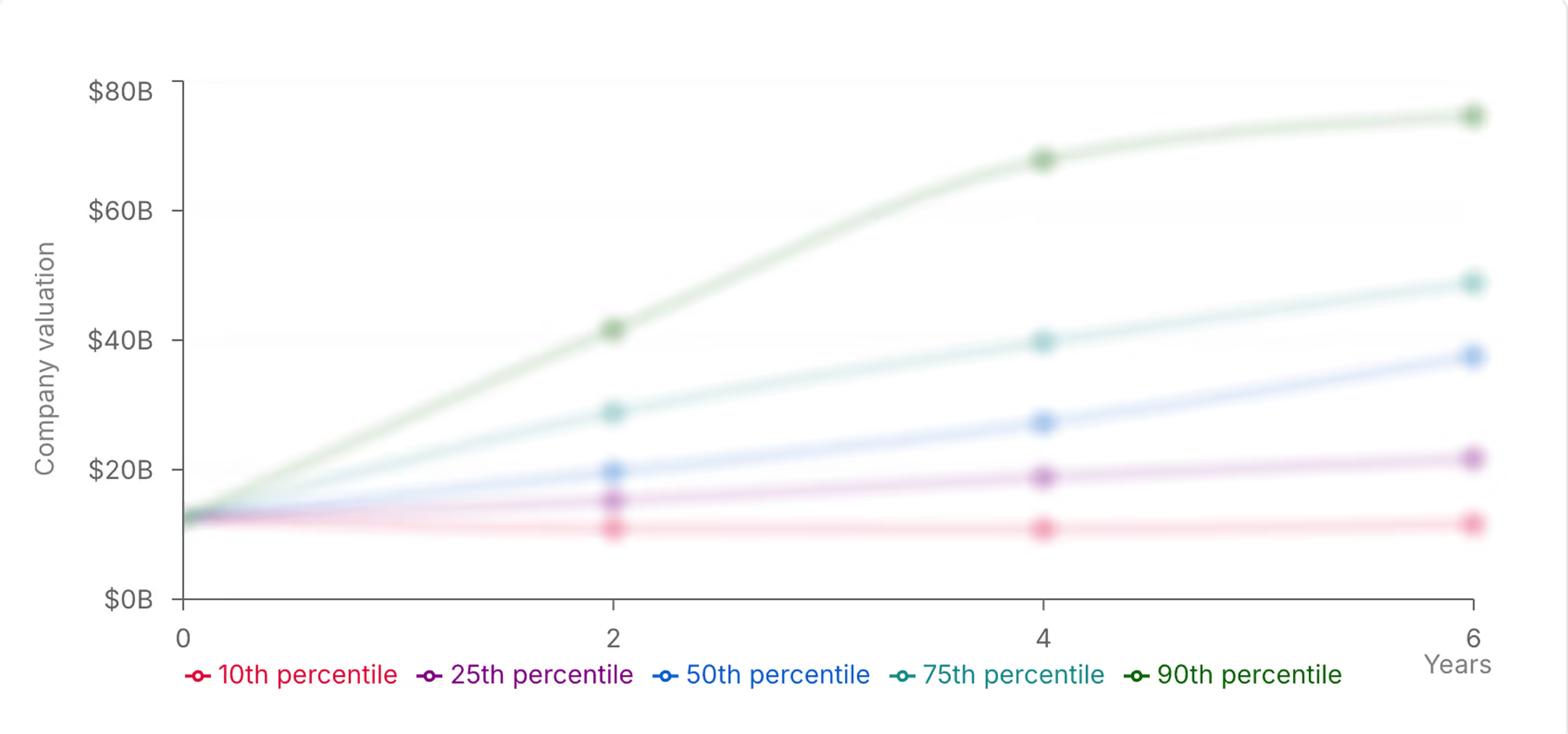
Prospect Projected Future Hugging Face Prices
Prospect’s machine learning model has been trained on the same data top-tier investors use to project the likely range of outcomes for Hugging Face's equity. Create a free account to view 10th-90th percentile projections over 2, 4, and 6 years.
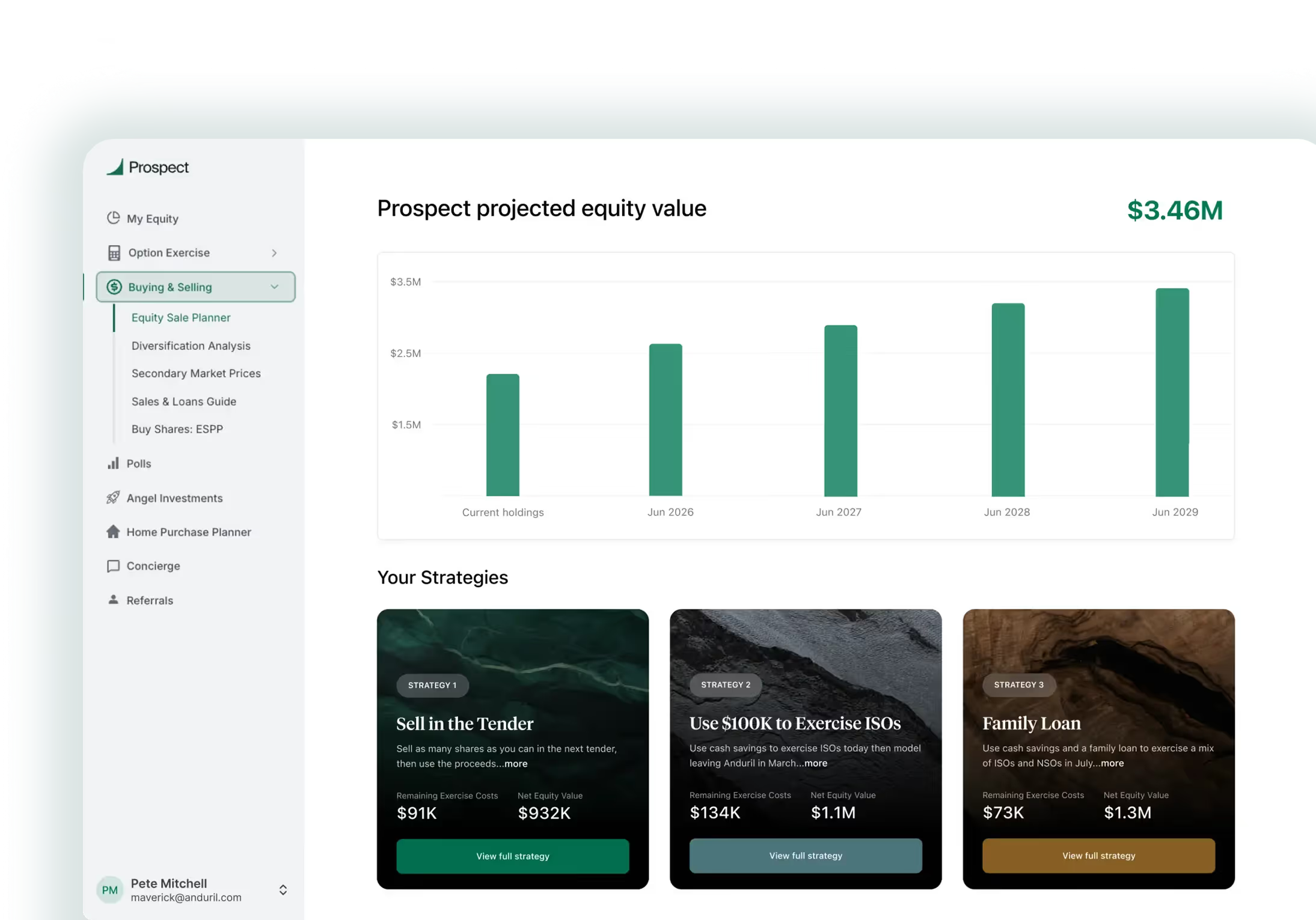
Powerful tools to earn more from your equity
Company Description
Hugging Face operates as a platform and community hub focused on artificial intelligence, providing open-source tools for users to build, train, and deploy machine learning models. The company’s offerings include the Hugging Face Hub for sharing models and datasets, Spaces for hosting AI applications, and software libraries for natural language processing. It also actively engages its community by organizing and promoting workshops, hackathons, and competitions. Founded in 2016 by Clement Delangue, Julien Chaumond, and Thomas Wolf, the company initially focused on NLP before expanding to become a broader platform for the AI and machine learning community, with primary locations in New York and Paris.
While the company has not detailed explicit long-term plans, its recent activities suggest a continued focus on expanding open-source AI infrastructure and fostering community development. Recent announcements include the introduction of a new file format, Optimized-parquet, designed for more efficient data storage and deduplication. Hugging Face has also released new command-line interfaces for interacting with its platform. In collaborations, the company has partnered with PyTorch and UnslothAI for a reinforcement learning environment development challenge and showcased the integration of its models with a Pollen Robotics robot on Cerebras Cloud, demonstrating multimodal capabilities.
- Salesforce Ventures
- Amazon
- Nvidia
- Intel
- AMD
- Qualcomm
- IBM
- Sound Ventures
- Lux Capital
- Sequoia Capital
- Coatue
- Addition
- A.Capital Ventures
- SV Angel
- Betaworks
- AIX Ventures
- Kevin Durant
- Rich Kleiman
- Olivier Pomel
- Cygni Capital
- Dev Ittycheria
- Florian Douetteau
- Richard Socher
- Augusto Marietti
- Paul St. John
- Alex Wang
- Greg Brockman
- Charles Zedlewski
- Ronny Conway
- Thibaud Elzière
- Clement Benoit
- Terrence Rohan
- Co-Founder, Clément Delangue
- Co-Founder, Julien Chaumond
- Co-Founder, Thomas Wolf
Peer Group Comparison
Vs Peer Group of >$4B Startups

Frequently Asked Questions
Joining Anduril as an employee is another way to acquire equity, typically through stock options included in compensation packages.
Is Hugging Face worth joining?
Deciding if Hugging Face is worth joining involves weighing its industry position, growth prospects, and your personal career ambitions against the compensation package. Tools like Prospect can help you model the potential future value of your equity compensation to make a more informed decision.
What should I do with my Hugging Face stock?
Managing your private company stock involves creating a strategy that aligns with your financial goals, considering factors like taxes and diversification. Platforms like Prospect offer customized strategies for exercising options and selling shares to help you maximize your post-tax earnings.
Can you sell Hugging Face stock?
As a private company, selling Hugging Face stock is typically limited to specific windows, such as company-approved tender offers or secondary market transactions. You can use tools from Prospect to determine the optimal amount and specific shares to sell for the best tax outcome during these events.
How can I find the value of my Hugging Face stock?
The value of private stock isn't publicly listed and is typically determined by internal 409A valuations or the price set during recent funding rounds. To better understand its potential, you can use platforms like Prospect, which use predictive models to forecast the future value of your shares.
What is Hugging Face's equity worth?
Hugging Face's overall valuation is established during private funding rounds led by venture capital investors. For an individual shareholder, understanding the potential worth of your specific holdings can be clarified using Prospect's forecasting tools and scenario modeling.
What is Hugging Face's stock ticker symbol?
Hugging Face does not have a stock ticker symbol because it is a privately held company. Ticker symbols are only assigned to companies when they become publicly traded on a stock exchange.
Can I buy or sell Hugging Face stock?
Selling shares in a private company like Hugging Face is generally restricted to specific events like tender offers, while buying is typically limited to accredited investors or employees with stock options. If you are an employee looking to sell, platforms like Prospect provide tools to help you navigate tender offers and optimize your sale for tax purposes.
What is the criteria to buy or invest in Hugging Face stock?
Investing in a private company like Hugging Face is typically restricted to accredited investors who meet certain financial thresholds or institutional firms participating in funding rounds. For employees who receive equity, platforms like Prospect can help manage the process of exercising options and planning for the financial implications.