
HoneyBook
HoneyBook offers a business management platform for small businesses, featuring tools for invoicing, contracts, scheduling, and client communication.
Secondary Market Price
How HoneyBook Measures Up
To help you manage your HoneyBook equity, Prospect has run the company through our machine learning model.
Prospect Rating
--
This rating reflects our belief in this company's potential to grow to that many times its current value in 4 years. For an employee with stock, this rating suggests a potential return on equity, but it also comes with some risk.
Exit Risk
--
Our rating is a reflection of the likelihood of this company achieving a liquidity event for its employees based on the quality of investors, funding stage, founders, and more.
Funding Stage
Series E
A company’s funding stage reflects how established it is, how quickly it is scaling, and the average impact an employee may have when joining.
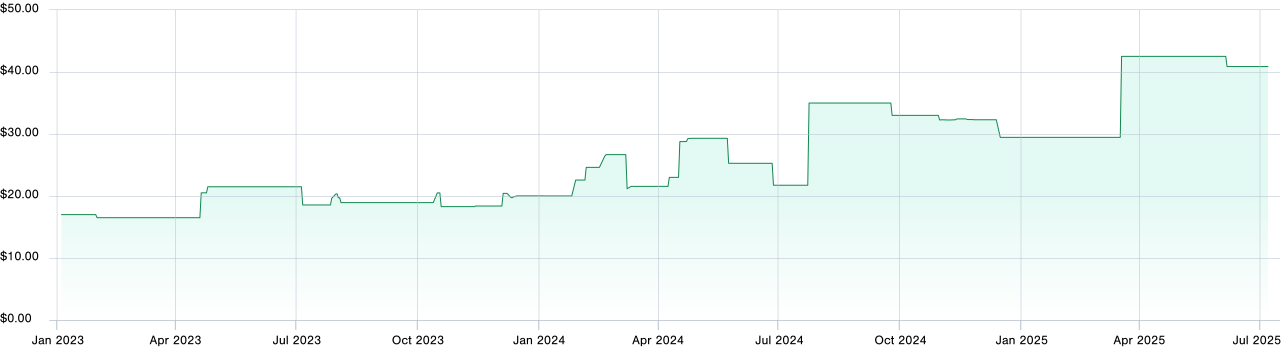
Secondary Market Price Chart
Create a free account to unlock real-time secondary market prices and future projections of HoneyBook's value.
Sign up to Unlock the Latest DataData will be available soon.
Sign up to receive notifications when it is available.
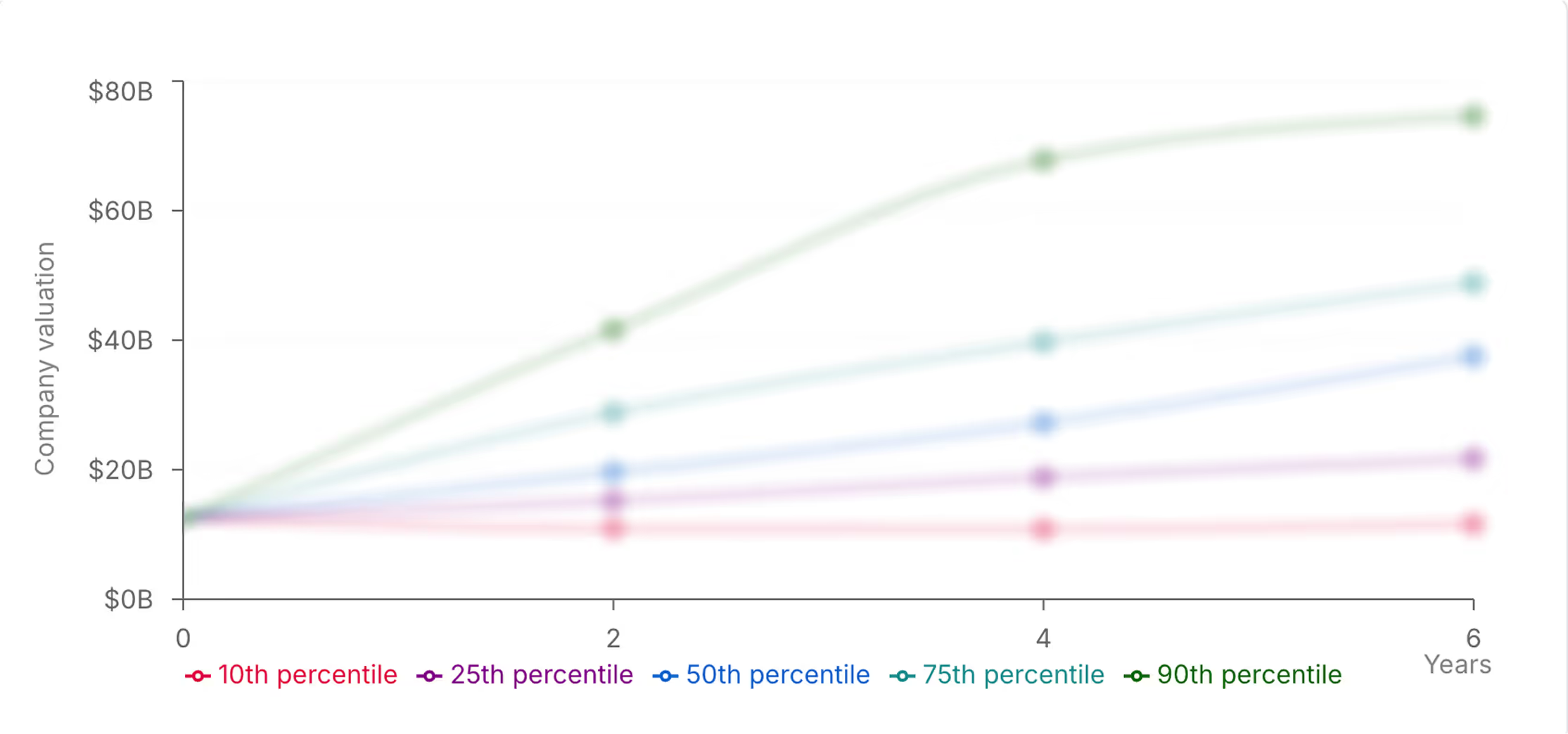
Prospect Projected Future HoneyBook Prices
Prospect’s machine learning model has been trained on the same data top-tier investors use to project the likely range of outcomes for HoneyBook's equity. Create a free account to view 10th-90th percentile projections over 2, 4, and 6 years.
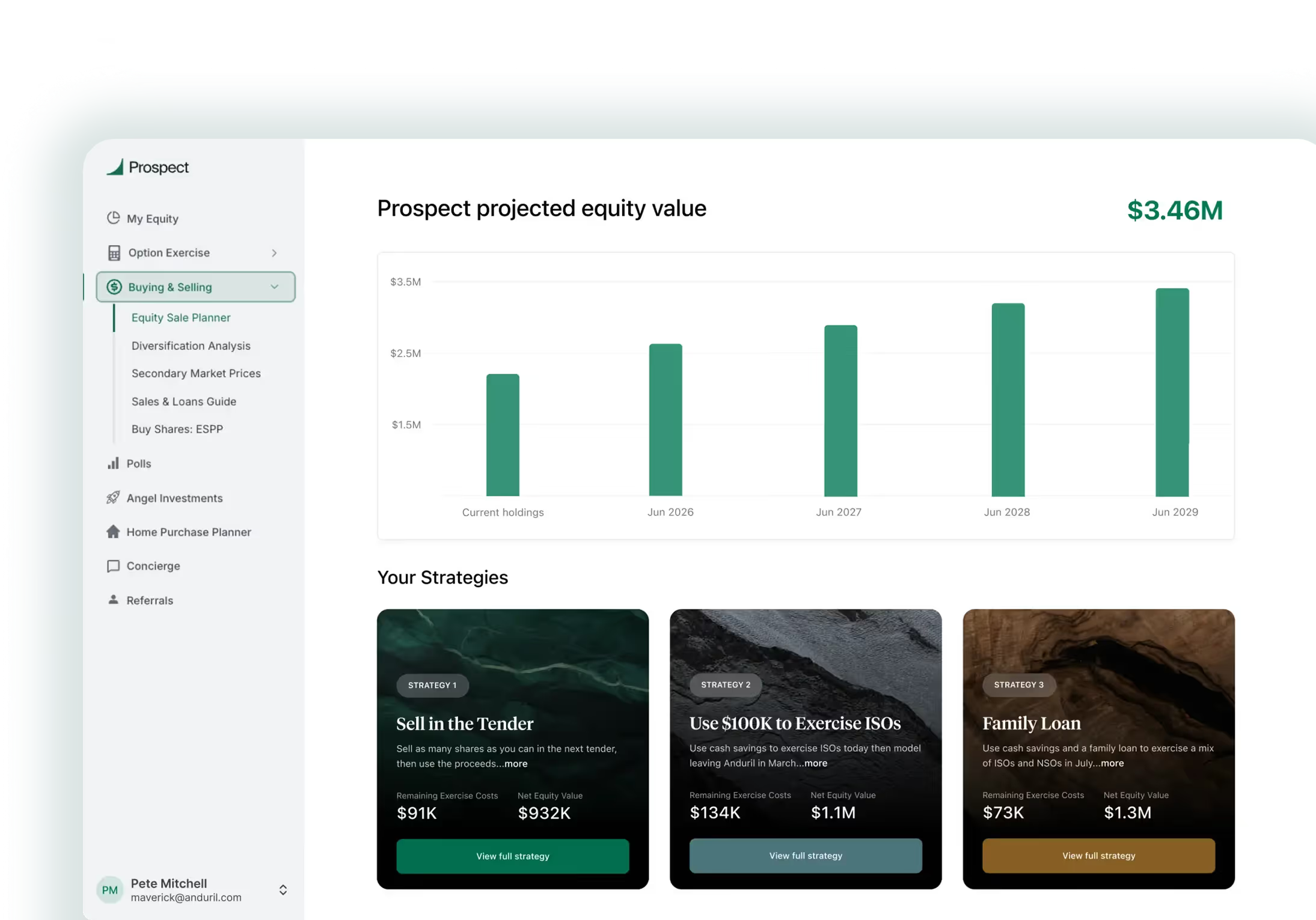
Powerful tools to earn more from your equity
Company Description
HoneyBook operates an AI-powered business management platform for small business owners, freelancers, and creative entrepreneurs. The platform offers tools for managing lead capture, client communications, contracts, and payments. Founded in 2013 by Oz Alon, Naama Alon, and Dror Shimoni, the company has its headquarters in San Francisco, CA, and an office in Tel Aviv, Israel. Since its inception, HoneyBook has processed more than $12 billion in transactions and supported over 25 million client relationships. The company's most recent funding round was a Series E in December 2021, which raised $250 million.
The company continues to develop its AI features and expand its educational offerings, such as webinars on tax strategies and business automation for independent business owners. Recent announcements include plans to participate in the Wedding MBA 2025 conference, where it will offer support and onboarding for new members. HoneyBook also regularly shares customer success stories, highlighting users who have grown their businesses and secured contracts with large corporations while using the platform.
- Tiger Global Management
- Durable Capital Partners LP
- Norwest Venture Partners
- Citi Ventures
- OurCrowd
- Aleph
- Hillsven Capital
- Vintage Investment Partners
- Battery Ventures
- Zeev Ventures
- 01 Advisors
- Co-Founder, Oz Alon
- Co-Founder, Naama Alon
- Co-Founder, Dror Shimoni
Peer Group Comparison
Vs Peer Group of >$4B Startups

Frequently Asked Questions
Joining Anduril as an employee is another way to acquire equity, typically through stock options included in compensation packages.
Is HoneyBook worth joining?
Deciding if a company is worth joining involves evaluating many factors, including the potential value of its equity compensation. Tools like Prospect can help you project the future value of startup equity to make a more informed career decision.
What should I do with my HoneyBook stock?
The right strategy for your HoneyBook stock depends on your personal financial situation, risk tolerance, and goals. Using a platform like Prospect can help you create a customized plan for exercising options and selling shares to maximize your after-tax returns.
Can you sell HoneyBook stock?
As a private company, HoneyBook stock is not publicly traded, but employees may be able to sell shares through secondary markets or company-approved tender offers. Prospect offers tools to help you navigate these opportunities and determine which shares are the most tax-optimal to sell.
How can I find the value of my HoneyBook stock?
The value of stock in a private company like HoneyBook is determined by its 409A valuation and secondary market transactions, not public market prices. You can use Prospect’s predictive models, which are trained on proprietary data, to forecast the potential future value of your shares.
What is HoneyBook's equity worth?
The precise worth of private company equity fluctuates based on factors like funding rounds, company performance, and market conditions. Platforms such as Prospect use machine learning models to project a likely range of outcomes for your equity's value.
What is HoneyBook's stock ticker symbol?
As a privately held company, HoneyBook has not yet had an Initial Public Offering (IPO) and therefore does not have a stock ticker symbol. Ticker symbols are only assigned to companies once they are listed on a public stock exchange.
Can I buy or sell HoneyBook stock?
Selling private shares is sometimes possible through tender offers or secondary markets, while buying is typically restricted to accredited investors. Prospect provides tools and strategies to help employees make informed decisions about when and how much to sell during these limited opportunities.
What is the criteria to buy or invest in HoneyBook stock?
Investing in a private company like HoneyBook is generally limited to institutional investors or individuals who meet the SEC's criteria for being an accredited investor. Employees, however, can acquire equity through their compensation packages in the form of stock options or RSUs.