
GrubMarket
GrubMarket is a technology company transforming the food supply chain with its B2B eCommerce platforms and enterprise AI solutions.
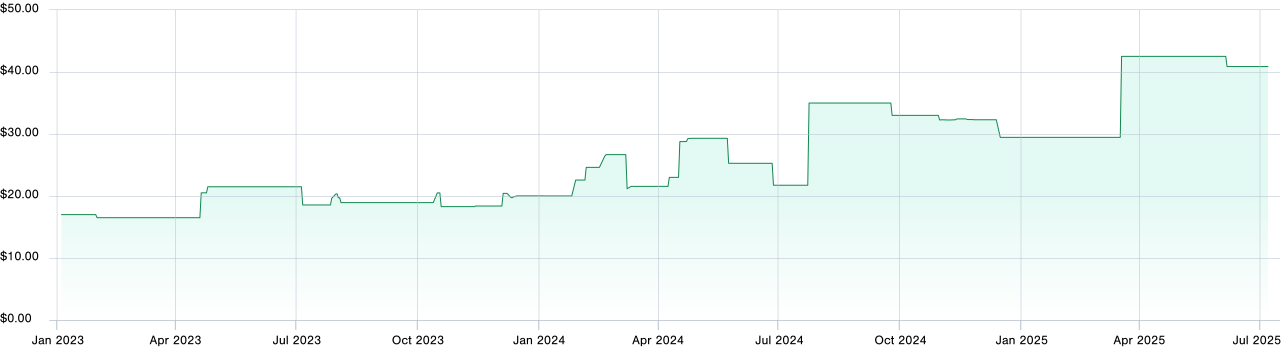
Secondary Market Price
How GrubMarket Measures Up
To help you manage your GrubMarket equity, Prospect has run the company through our machine learning model.
Prospect Rating
--
This rating reflects our belief in this company's potential to grow to that many times its current value in 4 years. For an employee with stock, this rating suggests a potential return on equity, but it also comes with some risk.
Exit Risk
--
Our rating is a reflection of the likelihood of this company achieving a liquidity event for its employees based on the quality of investors, funding stage, founders, and more.
Funding Stage
Series H
A company’s funding stage reflects how established it is, how quickly it is scaling, and the average impact an employee may have when joining.
Secondary Market Price Chart
Create a free account to unlock real-time secondary market prices and future projections of GrubMarket's value.
Sign up to Unlock the Latest DataData will be available soon.
Sign up to receive notifications when it is available.
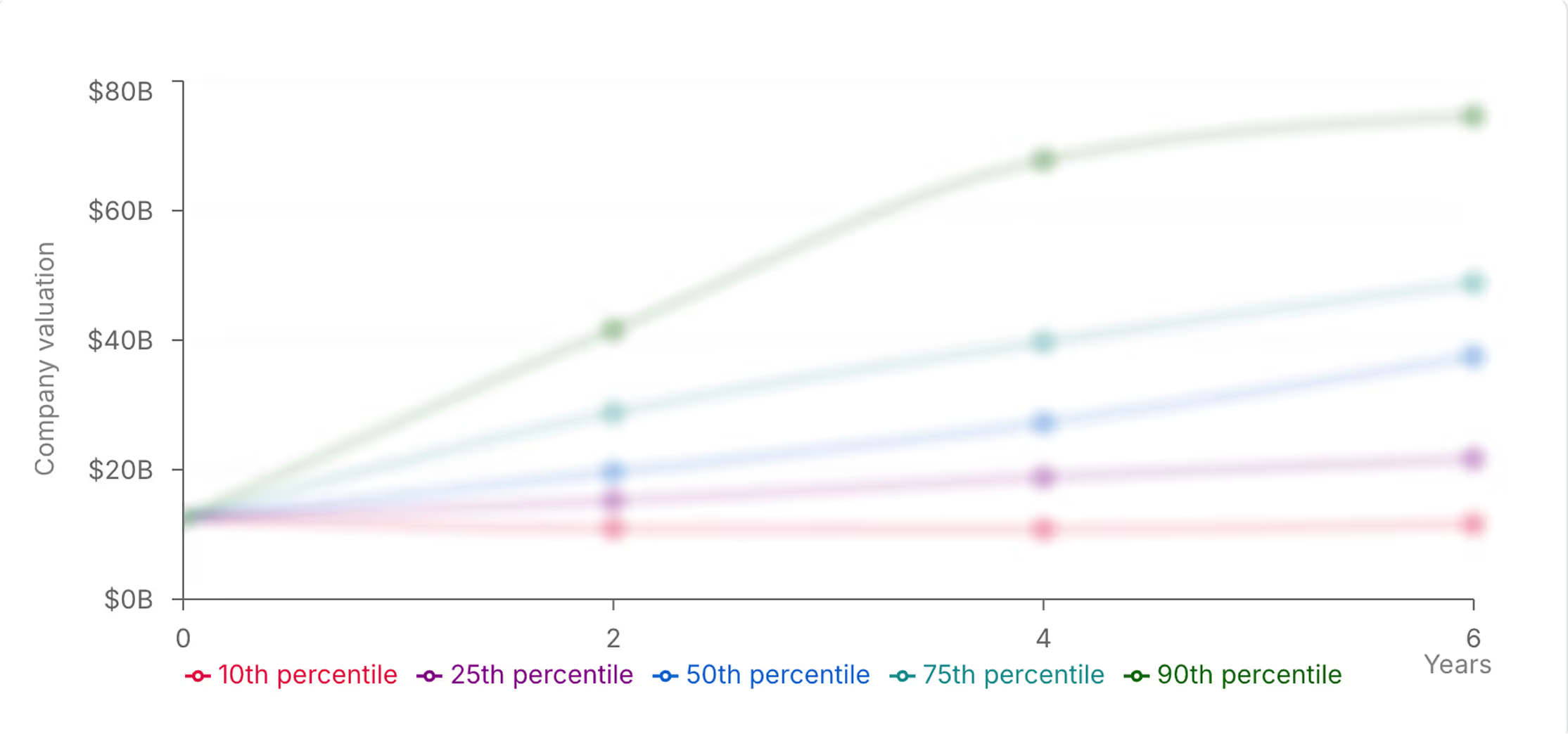
Prospect Projected Future GrubMarket Prices
Prospect’s machine learning model has been trained on the same data top-tier investors use to project the likely range of outcomes for GrubMarket's equity. Create a free account to view 10th-90th percentile projections over 2, 4, and 6 years.
Powerful tools to earn more from your equity
Company Description
GrubMarket is a technology company that provides software and e-commerce solutions for the American food supply chain. The company operates as a B2B platform, offering enterprise AI solutions, software-as-a-service (SaaS) products, and digital tools to farmers, food wholesalers, distributors, and retailers. Its services are designed to digitize and streamline operations within the food industry. Founded in 2014, the company initially focused on connecting consumers with local farms. It has since evolved to become a B2B technology provider, growing through both organic development and acquisitions to become one of the larger private food technology companies in the U.S.
The company's recent activities indicate a focus on expanding its enterprise software capabilities and strengthening its corporate governance. In 2024, GrubMarket acquired Procurant, a SaaS procurement and trading platform for the fresh-produce industry with a network of over 850 customers across 14 countries. GrubMarket plans to integrate Procurant's technology to enhance its AI-powered offerings for the fresh food sector. The company also appointed a new Chief Legal Officer with experience at the U.S. Securities and Exchange Commission, signaling a move to bolster its legal and compliance framework to support future growth and operational scale.
- Liberty Street Funds
- 3Spoke Capital
- ROC Venture Group
- Portfolia
- Pegasus Tech Ventures
- Joseph Stone Capital
- Tiger Global Management
- GGV Capital
- Battery Ventures
- General Mills' venture arm (301 INC)
- Squarepoint Capital
- Grosvenor Food & AgTech
- Walleye Capital
- Celtic House Asia Partners
- Apeira Capital
- Y Combinator
- Celtic House Asia Partners
- WI Harper Group
- Digital Garage
- University Growth Fund
- Fusion Fund
- Evolv Ventures
- CentreGold Capital
- Arancia International
- Notable Capital
- Hans Tung
- Lu Zhang
- Jie Chen
- Bascom Ventures
- Alumni Ventures Group
- Kima Ventures
- Global Founders Capital
- Andreessen Horowitz
- Greycroft
- Accel
- Correlation Ventures
- Founders Fund
- Lightspeed Venture Partners
- Founder, Mike Xu
Peer Group Comparison
Vs Peer Group of >$4B Startups

Frequently Asked Questions
Joining Anduril as an employee is another way to acquire equity, typically through stock options included in compensation packages.
Is GrubMarket worth joining?
Whether joining GrubMarket is a good move depends on your career goals and the company's growth, with equity compensation being a key part of the equation. A platform like Prospect can help you model the potential value of an equity offer to make a more informed decision.
What should I do with my GrubMarket stock?
Deciding what to do with private company stock involves weighing your personal financial goals against tax implications and your risk tolerance. Tools from services like Prospect can help you create a custom strategy by modeling different scenarios and optimizing for taxes.
Can you sell GrubMarket stock?
As a private company, GrubMarket stock isn't traded on a public exchange, but employees can often sell shares through secondary markets or company-approved tender offers. Platforms like Prospect offer tools to help you navigate these sales and determine which shares are the most tax-optimal to sell.
How can I find the value of my GrubMarket stock?
The value of private stock is typically determined by a company's 409A valuation, which is used for tax purposes, or by prices on secondary markets. You can also use specialized platforms like Prospect, which use predictive models to help forecast the potential future value of your equity.
What is GrubMarket's equity worth?
The precise worth of GrubMarket's equity is based on its private valuation, which is not public information and changes with new funding rounds and business performance. To understand what your specific holdings might be worth, you can use equity management tools to model potential outcomes based on available data.
What is GrubMarket's stock ticker symbol?
GrubMarket is a private company, so it does not have a stock ticker symbol. Ticker symbols are only assigned to companies when they become publicly traded on a stock exchange.
Can I buy or sell GrubMarket stock?
Selling private stock is sometimes possible for employees and early investors through secondary markets, while buying is typically limited to accredited investors during specific funding rounds. If you are an employee looking to sell, a service like Prospect can help you analyze the financial and tax implications of a sale.
What is the criteria to buy or invest in GrubMarket stock?
Investing in a private company like GrubMarket is generally restricted to accredited investors who meet specific income or net worth requirements defined by regulators. Employees, however, typically receive equity as part of their compensation without needing to meet these investor criteria.