
Destiny
Destiny provides public access to private tech companies through its flagship product, the Destiny Tech100, an exchange-traded portfolio.
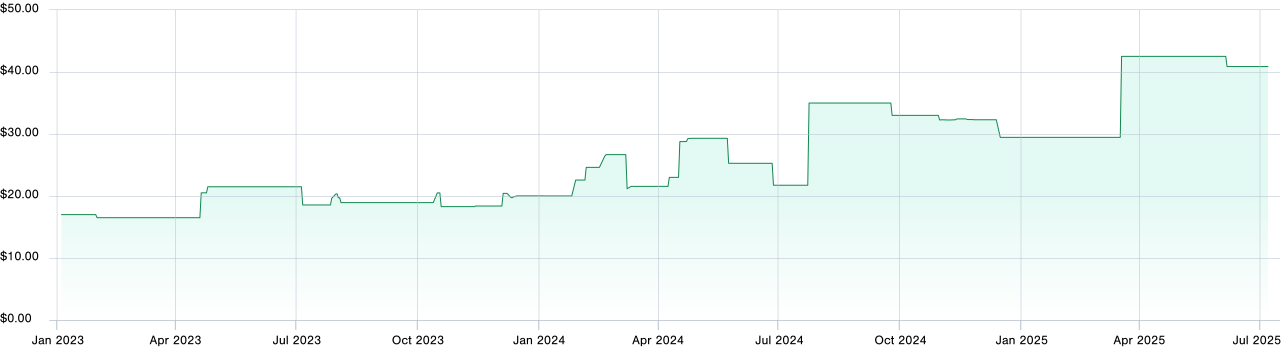
Secondary Market Price
How Destiny Measures Up
To help you manage your Destiny equity, Prospect has run the company through our machine learning model.
Prospect Rating
--
This rating reflects our belief in this company's potential to grow to that many times its current value in 4 years. For an employee with stock, this rating suggests a potential return on equity, but it also comes with some risk.
Exit Risk
--
Our rating is a reflection of the likelihood of this company achieving a liquidity event for its employees based on the quality of investors, funding stage, founders, and more.
Funding Stage
Series A
A company’s funding stage reflects how established it is, how quickly it is scaling, and the average impact an employee may have when joining.
Secondary Market Price Chart
Create a free account to unlock real-time secondary market prices and future projections of Destiny's value.
Sign up to Unlock the Latest DataData will be available soon.
Sign up to receive notifications when it is available.
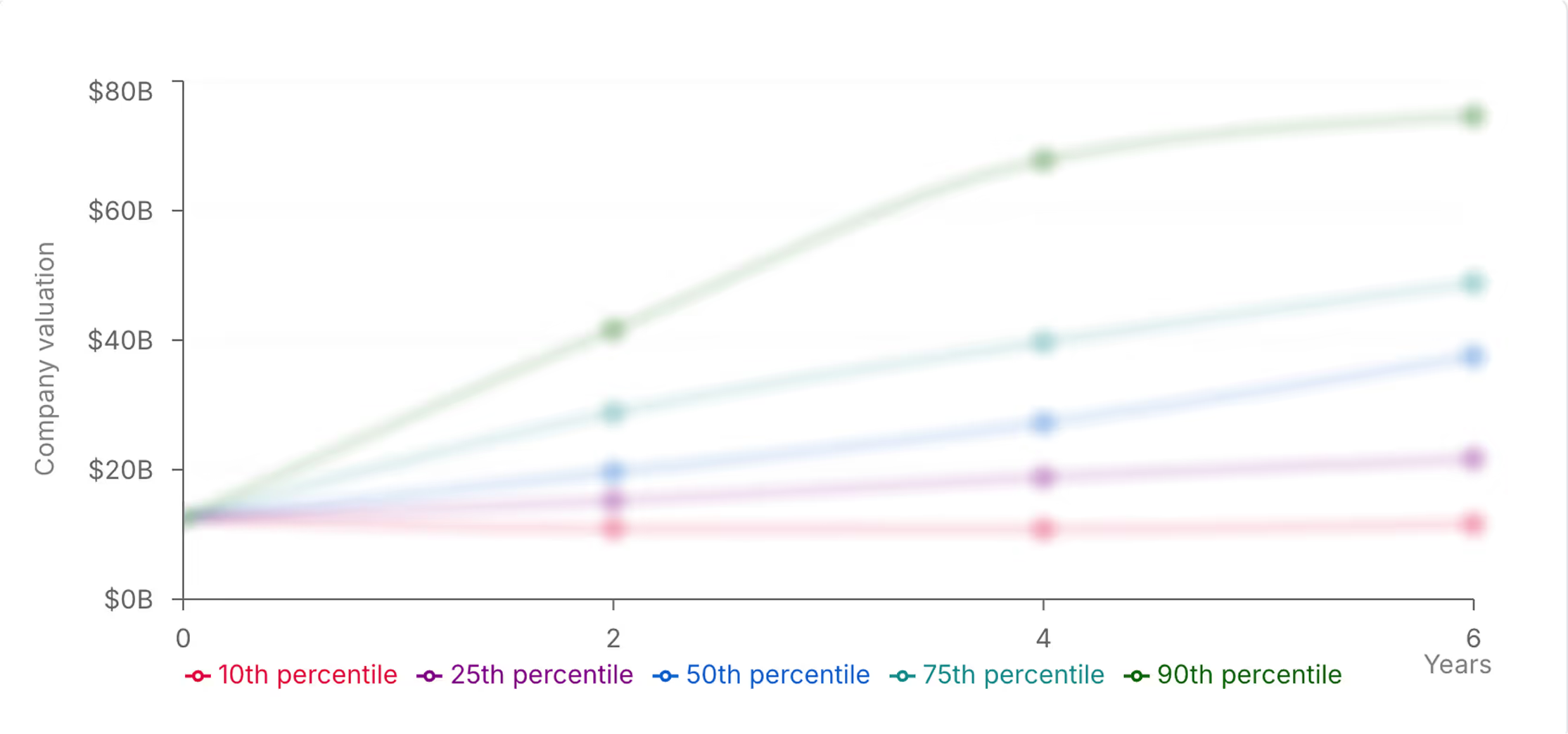
Prospect Projected Future Destiny Prices
Prospect’s machine learning model has been trained on the same data top-tier investors use to project the likely range of outcomes for Destiny's equity. Create a free account to view 10th-90th percentile projections over 2, 4, and 6 years.
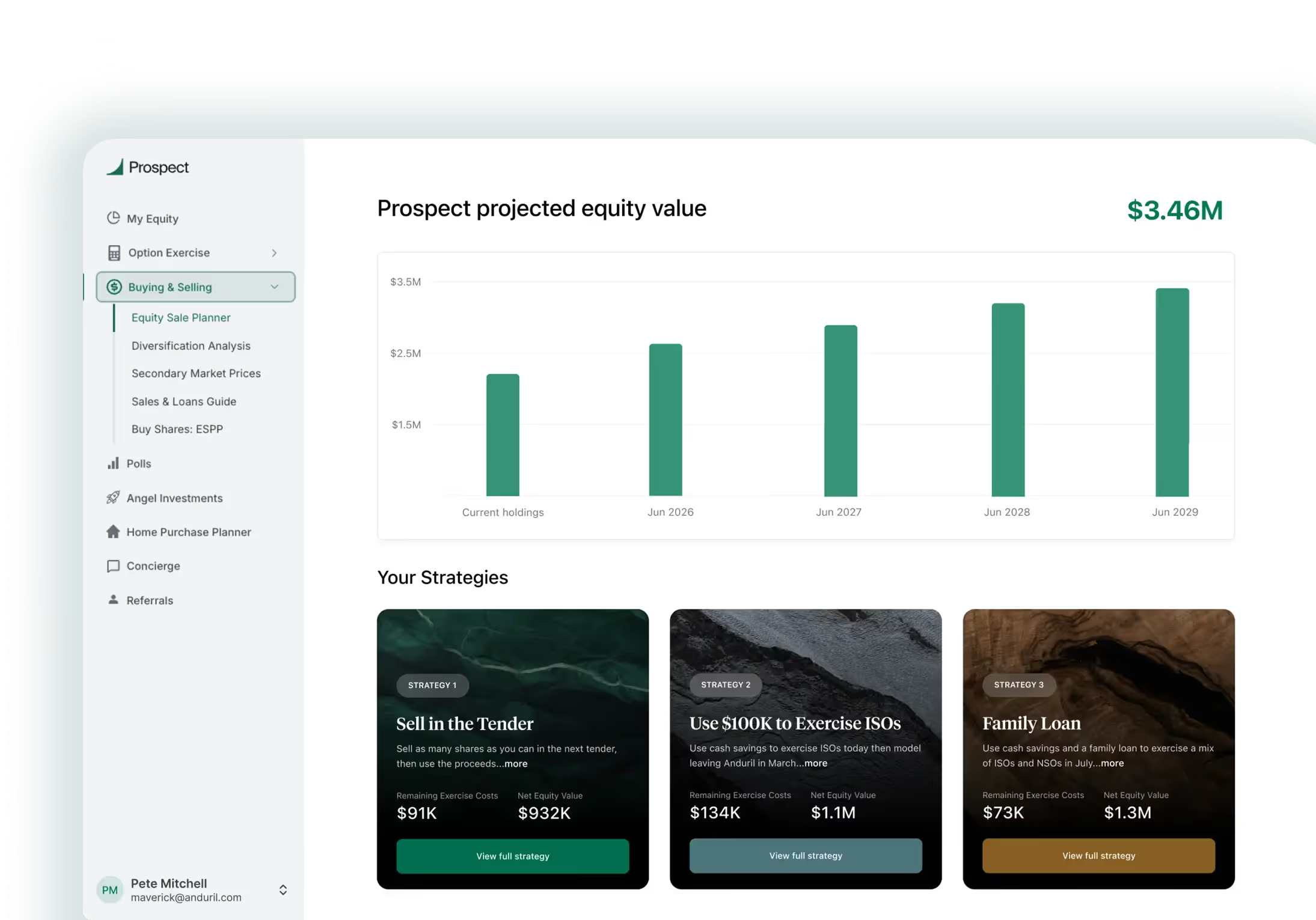
Powerful tools to earn more from your equity
Company Description
Destiny is a company focused on creating investment products that provide public access to private, high-growth technology companies. Its primary offering is the Destiny Tech100, an investment portfolio of the top 100 venture-backed private technology firms. The company was established to address the historical lack of access for retail investors to private market deals, which have traditionally been available only to institutions and insiders. The company highlights the potential returns missed by the public in the pre-IPO stages of companies like Airbnb, Doordash, and Snowflake as a key problem it aims to solve.
Looking forward, Destiny plans to create a family of exchange-traded products, with the Destiny Tech100 being the first. Once these products are publicly listed, they will be available to anyone with a brokerage account in the United States, regardless of their net worth. The upcoming launch of the Destiny Tech100 represents a key step in the company's plan to provide broader access to investments in private technology companies. The company's stated objective is to allow a wider range of investors to participate in the growth of these firms before they enter the public markets.
- Founders of Coinbase
- Founders of Quora
- Founders of Runway
- Founders of Superhuman
- Founders of Dropbox
- Current and former Partners at Sequoia Capital
- Current and former Partners at Greylock Partners
- Current and former Partners at Y Combinator
- Nas
- Keisuke Honda
- Heather Hasson
- Co-Founder, Sohail Prasad
- Co-Founder, Samvit Ramadurgam
Peer Group Comparison
Vs Peer Group of >$4B Startups

Frequently Asked Questions
Joining Anduril as an employee is another way to acquire equity, typically through stock options included in compensation packages.
Is Destiny worth joining?
Deciding whether to join any startup involves weighing its growth prospects, company culture, and the value of its compensation package. Tools like Prospect can help you analyze the potential value of an equity offer to make a more informed decision.
What should I do with my Destiny stock?
Managing private company stock requires a strategy tailored to your financial goals and the company's outlook. Platforms like Prospect offer customized option exercise and stock sale strategies to help you maximize your earnings and minimize taxes.
Can you sell Destiny stock?
Selling stock in a private, pre-IPO company is typically possible only during specific liquidity events, such as a tender offer or on a secondary market. These opportunities can be infrequent and are subject to company approval.
How can I find the value of my Destiny stock?
The value of private company stock is determined by internal 409A valuations or recent funding rounds, not public markets. You can use a platform like Prospect, which uses predictive models to help forecast the potential future value of your shares.
What is Destiny's equity worth?
A private company's valuation is typically set during its most recent funding round and is not publicly disclosed. This valuation reflects what investors were willing to pay for a stake in the company at that time.
What is Destiny's stock ticker symbol?
As a private company, Destiny does not have a stock ticker symbol because its shares are not traded on a public exchange. Ticker symbols are only assigned to companies after they complete an Initial Public Offering (IPO).
Can I buy or sell Destiny stock?
Buying shares in a private company is generally restricted to employees or accredited investors during specific funding rounds. Selling is also controlled, often limited to company-approved tender offers or secondary market transactions.
What is the criteria to buy or invest in Destiny stock?
Investing in a private company is usually limited to accredited investors who meet specific financial thresholds set by regulators, or to employees receiving equity as compensation. Opportunities for the general public to invest in pre-IPO companies are rare.